Featured

So…Let’s Change Things!


There is no fear in love, but perfect love casts out fear. For fear has to do with punishment, and whoever fears has not been perfected in love.

1 John 4:18, ESV

Few people can argue that 2020 has been one of the most turbulent years in recent memory. In fact, the disruption to the life of our family and church family is the main reason that I have not posted anything in several weeks. But, ours is not the only lives that have been changed in recent days. The family and friends of George Floyd have lost someone that was very precious to them, and the pain and scars of his unnecessary and brutal death will not heal quickly. To compound the problem, there are those individuals and groups who have taken the peaceful protests and rallies that were started to bring attention to Mr. Floydโ€™s, yes, I will say it, murder and the racism that persists in this nation, and they have turned it into an opportunity to do evil themselves despite Mr. Floydโ€™s family making clear and persistent pleas for the violence to stop. This violence does not help the cause for bringing an end to the evil that is at the heart of Mr. Floydโ€™s death, and frankly, neither do the hollow speeches and social media posts of so many celebrities and politicians. Letโ€™s face it, neither will the legislation that many are calling for because at the end of the day, legislation does not affect the point of origin for the hatred and fear at the root of racism because legislation does not change the heart.

Jesus said in the gospel of Matthew, โ€œBut what comes out of the mouth proceeds from the heart, and this defiles a person. For out of the heart come evil thoughts, murder, adultery, sexual immorality, theft, false witness, slanderโ€ (15:18-19). At the end of the day, the problem is not a broken judicial, educational, or financial system, it is the wicked hearts of wicked people. A personโ€™s actions are simply an expression of who he or she is at heart. So, if society is to change, it must begin with a heart change of the people who make up that society. Unfortunately, that is often easier said than done. The heart is the seat of the human will. It is in the heart that the personโ€™s goals, dreams, plans, desires, and biases that make up their identity reside. As a result, the heart is often the part of a personโ€™s life that is very guarded. People behave as though whatโ€™s in the heart must be protected at all costs because of its close association to their identity. This is true no matter if what is in a personโ€™s heart is good or evil, self-serving or selfless. So, how can a personโ€™s heart be changed?

First, people have to turn to Christ. Some would say that this is not true and that religion only makes things worse. To those I would say that religion does make things worse especially when one religion tries to impose their beliefs upon others who have differing beliefs. Such an imposition will only breed more hatred in the heart of those who are the recipients of such religious oppression. So, I am not talking about religious oppression. I am not talking about forcing a religion anyone, but I am inviting and encouraging people to enter into a relationship with Christ who taught us to love our neighbor as ourselves (Matthew 22:39), and to love even our enemies and those who persecute us (Matthew 5:43-44). When a person gives their life to Christ, God changes who he or she is. He changes his or her identity by removing the sin and replacing it with His very presence through His Spirit. The apostle Paul reminded the church at Corinth, โ€œTherefore, if anyone is in Christ, he is a new creation.The old has passed away; behold, the new has comeโ€ (2 Corinthians 5:17). If you would like to know more about beginning a relationship with Christ, contact me and I will be glad to talk you through it.

The second thing that must take place is that individuals have to see that we are all human and we are all equal recipients of Godโ€™s love, and therefore we should love one another regardless of the characteristics that we have chosen to divide over. Itโ€™s amazing when a person allows themselves to look beyond another personโ€™s race, nationality, or socioeconomic station, that they see that the person that he or she held in contempt for so long really has many of the same wants and dreams as anyone else. Now is the time to reach out to that person who looks or sounds different from you and build a relationship with that person and really get to know them as a person. Let the love of Christ shine through you and cast out the fear (1 John 4:18) that has held you back from being the person that Christ died for you to be and the person that this world desperately needs right now. 

If we will take these two steps, it may not immediately change the world, but it will change us, and thatโ€™s a start.

Featured

A Christian’s Response to Worry


Worry is a sickness that attacks a personโ€™s faith, hope, and joy.


There is a lot going on in the world this week. The number of those infected by COVID-19 is growing. The number of deaths as a result of the virus is increasing. The stock market has been in sharp decline affecting the income and retirement of many. Some people would say that we have a lot to worry about. Apparently many people are worried. There is a great deal of panic buying going on in the US, numerous events have been canceled, and a number of venues have been closed. This is not a post to tell you that we shouldnโ€™t be concerned. Concern is one thing; worry is something completely different. Concern means that a person is aware of what is going on around them and they are taking the appropriate level of precautions. Worry is itself a sickness that attacks a personโ€™s faith, hope, and joy. So how do we deal with worry?

We need to realize that worry does not come from God. As a matter of fact, worry is the opposite of faith. Paul reminded his young son in the faith Timothy that God had not given him a spirit of fear, but one of power and love and self-discipline (2 Timothy 1:7). So if we have worry in our life, it has been placed there by the enemy to distract us from the richness that comes through a relationship with God. The enemy is seeking to distract us from the power that God has to defeat any challenge. The enemy is seeking to distract us from the incredible love that God has not only for His children, but for the whole world. The enemy is trying to rob us of the self-discipline that is a hallmark of a life founded on a trust in the strength, power, and goodness of God.

We also need to realize thatย there is an appropriate way to handle worry: give it to God. Peter reminds us in his first epistle to humble ourselves before God, and one of the ways to do that is by โ€œcasting all your anxieties on Him, because He cares for you.โ€(1 Peter 5:7). It is interesting that Peter chose to use the word โ€œcastingโ€ or โ€œthrowing.โ€ By casting our cares upon God it shows our resolve to be finished with them. Itโ€™s not enough just to simply pray over our concerns. Instead, we must resolve to completely turn our concerns over to God and allow Him to deal with them according to His perfect will. โ€œCastingโ€ our cares on God also indicates the fact that we have rejected the claim that worry has upon our life. Just as when we throw something away because we want to be rid of it, we must throw our worries away to God so that we can be rid of it in our life.

But, itโ€™s not enough just to get rid of worry. We have to replace worry with something else or it will come back. We have to replace it with faith. Jesus addressed worry in Luke 12:22-31. Jesus begins by telling His hearers and us to not be anxious about our life. He then goes on to remind us that God feeds the ravens, worry doesnโ€™t extend anyoneโ€™s life, and that He even clothes the lilies. God does all of this and yet neither the ravens not the lilies are as precious to God as you are. Jesus reminds us to let God handle our needs while we focus on keeping His kingdom first in our lives. In other words, we trust God to take care of the things that have the potential to burden our life, and in turn, we focus on living in obedience to His will.

There is one other way that Christians should respond to worry.ย We should be ready to give an answer for the hope that we have in Christย (1 Peter 3:15). Because of the salvation that we have been given through the death, burial, and resurrection of Christ, we can trust Him not only with our eternal destiny, but we can also trust Him with everything that comes up in our life now. We need to remind others that like every other form of sickness that we face in this world, the COVID-19 virus and the resulting burdens are a result of the presence of sin in the world. The only cure for sin is Christ. But, as we share this hope, we must do it with gentleness and kindness and not arrogance. We should do it with a desire to help others have the same peace that we possess.


If the Lord be with us, we have no cause of fear.  His eye is upon us, His arm over us, His ear open to our prayer โ€“ His grace sufficient, His promise unchangeable.

John Newton

In closing, believers need to see disasters such as these not as an opportunity to behave as others who have no hope, but instead to demonstrate the faith, confidence, and freedom from worry that a person can have through Jesus Christ. Letโ€™s show the world what a life that has been radically changed by a relationship with Christ really looks like. Letโ€™s show the world how to live free of worry and full of faith. As John Newton, the writer of Amazing Grace, once said, โ€œIf the Lord be with us, we have no cause of fear.  His eye is upon us, His arm over us, His ear open to our prayer โ€“ His grace sufficient, His promise unchangeable.โ€

Featured

The Currency of a Relationship

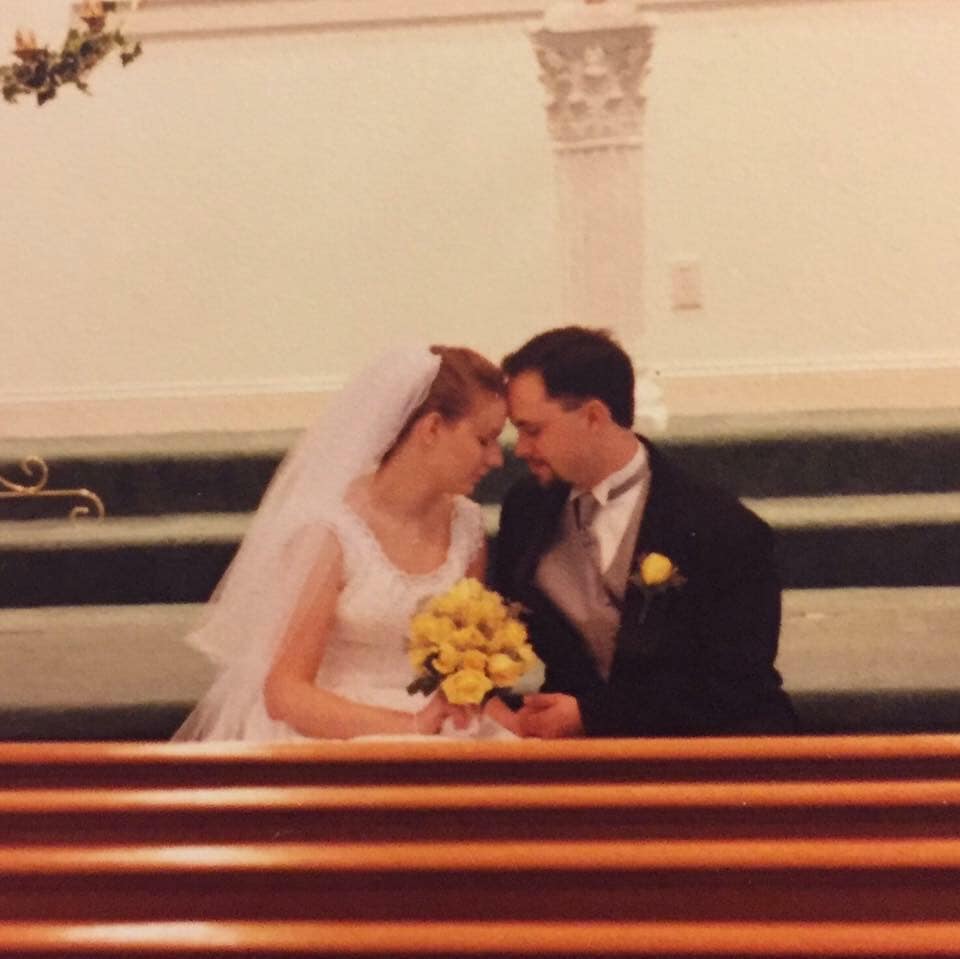
89475586_10158158270222265_8402144233678438400_nMonday marked eighteen years that my wife and I have been married. I would be lying if I said that every year passed in perfect peace. In those eighteen years we have experienced three ministry transitions, three pregnancies, a few health concerns, seminary and now a teenage daughter. That is not to say that the years have all been bad either. We are blessed with three great daughters, we have seen God do things that many people have only heard about, and we have grown closer together through the highs and the lows. But, like everything else in life, good relationships come at a price and that price is time. Iโ€™m not talking about the time that you endure waiting to see a doctor. Iโ€™m talking about the kind of time that you spend preparing a sermon, building a piece of furniture, working in a garden, or preparing a delicious meal. Iโ€™m talking about invested time. Whit and I have invested a lot of time with each other, and it has paid off in a relationship that neither of us would trade for anything or anyone else on earth. But, even on our best day, we know that we each come in second in the other personโ€™s life next to our relationship with God.


To a lot of people that might sound strange, but the fact remains that God desires an intimate relationship with us and we should reciprocate that desire as well. Unfortunately, many who identify themselves as Christians do not have such a relationship with God or even a desire for such a relationship. Instead, God remains more of a tradition; someone we encounter only superficially through a visit to a local place of gathering that is often identified as a church. There we hear songs about God.  A minister may deliver a sermon that might make reference to God but often tends to be more of a moralistic monologue designed to help people make their lives better. We may even have friends there that we look forward to seeing and who hold a special place in our life. Yet when itโ€™s all over, we leave our relationship with God at the door of the worship center where we will pick it back up the next time we are there. For many of us we have nothing more than a Sunday morning relationship with God. If this is true, can there be any question as to why a relationship with God that has the preeminent place above all other relationships in a personโ€™s life seems strange to so many, including those who claim to be Christians?

Can you imagine a marriage where the only contact between the husband and wife came in the form of occupying the same space with minimal conversation for only one hour a week? Most would say that such an arrangement could only be qualified as a marriage in the legal sense because there is no real relationship there at all. Many would argue that for a relationship to be characterized as a healthy marriage there should be a solid investment of time with one another. Not just time spent enduring one anotherโ€™s company, but real invested time. This is the currency of a relationship and it is just a true in a personโ€™s relationship with God as it is in a marriage relationship. So how is a person supposed to spend time with God when He canโ€™t be seen or touched? You could ask someone whose spouse is a long-haul truck driver or a member of the military. While I canโ€™t speak from the perspective of that particular type of relationship, I can speak on what it takes to have a relationship with God, and in both situations it takes an investment of relationship currency. It takes meaningful time.

Just like in a marriage, a relationship with God requires two primary elements: love and communication. I guess thatโ€™s why the Holy Spirit inspired Paul to compare the relationship between Christ and the church to that of a husband and wife (Ephesians 5:22-33). In our relationship with God, there has to be a mutual expression of love. God has already done that by sending His Son to die for our sins (John 3:16; Romans 5:8) and He continues to demonstrate His love for us through the ministry of His Holy Spirit as we progress in our relationship with Him. The question becomes, โ€œHow do we demonstrate a love for God in return?โ€ To put it in a single word: worship.

Worship takes on many forms. It can involve singing, but it doesnโ€™t have to. Worship is primarily our best expression of love and appreciation to God for who He is and what He has done for us. Oswald Chambers may have said it best when he wrote in his devotion, My Utmost for His Highest, โ€œWorship is giving God the best that He has given you.โ€ Worship is showing God how much you love and trust Him by giving back to God an offering of something precious to you. The most common form is through tithes and offerings, but we should not overlook an offering of time to God. There is nothing so precious to us as time, because we know that we have it in such limited quantities. What then could be a more precious gift to God, than setting aside time each day just for Him where we spend time relating to Him or spend time serving Him in some way? This leads us to the next element of a healthy relationship with God and that is communication.

A person may ask, โ€œIf we canโ€™t see God and we canโ€™t hear God, how are we supposed to communicate with God?โ€ Just because we canโ€™t hear an audible voice from God, does not mean that He does not communicate with us. The primary way that God communicates with us is through the Bible. The Bible is the revelation of Godโ€™s will for humanity. In it He communicates His expectations for us, but He also communicates the abundance of grace and mercy that He has to offer us. Thatโ€™s just the beginning. The Bible is also full of wisdom for everyday life. A great example of this is found in the book of Proverbs. Another way that God communicates to us, though to a lesser degree, is through the prompting of the Holy Spirit. But, how can a person know if they are being prompted by the Holy Spirit? The Holy Spirit will never prompt us to speak or act in a way that contradicts the Bible.

However, God doesnโ€™t just want us to hear from Him, He also wants to hear from us and we do that through prayer. In prayer we speak words of love and worship back to God, and we also express our needs and desires. Often the greatest need we have is for God to forgive us for our lack of attention to our relationship with Him brought on by some unconfessed sin. Prayer is not complicated. Itโ€™s just talking to God, but like worship, it requires an investment of time. However, when we are willing to make that investment, the reward is a closer and deeper relationship with God than anything we have ever experienced.

So, maybe your relationship with God has lost the spark and excitement that it once had. I promise, all it needs is an investment of the currency of relationships. It just needs an investment of time. If we will do that, we will find that God is ready to meet us halfway (James 4:8).

Featured

Do “Thoughts and Prayers” really make a difference?


Anytime there is some type of disaster, you can usually find people who are quick to post, tweet, or otherwise communicate their intention to pray for those affected. And, you will also find those who are just as quick to condemn and even mock such actions. So it makes you wonder, “Does it really even matter if we pray when something tragic happens?” Such has been the case this week. When word began to spread that Nashville and the surrounding communities had suffered horrific damage and loss of life after a tornado ripped through the area, people began to immediately express their intent to pray for those affected. And, right on cue, there were those who were quick to denounce the effectiveness of those prayers.

It’s true, you will find some people who express their intent to offer prayer are really more interested in virtue signaling for personal attention. They actually have no intention of praying, and even if they did, those prayers would probably be generic in nature and offered to a generic god that meats their ideal of what God should be like. What they really mean is that the condition of those affected has crossed their mind in a way that it has caused them to feel sorry for those suffering. But, for those who are curious about the effectiveness of prayer or for some of those who sincerely pray for people who are going through some tragedy, the question may persists, โ€œDoes prayer really matter?โ€

We know the Bible records instances when people prayed, and circumstances were changed. For instance, in 1 Samuel we read of Hannah who was unable to have children, yet she prayed, and God gave her the ability to conceive and she gave birth to Samuel who went on to become a judge and one of the greatest prophets in the history of Israel. We also read in 1 Kings 18about Elijah, who challenged the prophets of Baal to invoke their god to send down fire from heaven and consume their sacrifice. Despite all sorts of attempts, they were unable to do so, but when Elijah prayed a simple prayer, God answered by fire and consumed not only the sacrifice, but the altar and the water which had been poured over them both.

…prayer is not a discipline reserved only for biblical heroes and heroines or the super spiritual.

However, prayer is not a discipline reserved only for biblical heroes and heroines or the super spiritual. God instructs all of His people to pray. Take for example Colossians 4:2. Paul wrote, โ€œContinue steadfastly in prayer, being watchful in it with thanksgiving.โ€ In his first letter to the Thessalonian church Paul gave his famous reminder to โ€œpray without ceasingโ€ (5:17). Why? He knew of the effectiveness of prayer. Prayer had become so important to the apostle and the fulfillment of his mission that on more than one occasion he called upon people to support his work in prayer (See 2 Corinthians 1:11; Philippians 1:9; Colossians 4:3; 1 Thessalonians 5:25).

Someone might argue though that the belief in the effectiveness of prayer was a personal view held by Paul. This can hardly be true. After all, when the disciples had the opportunity to ask Jesus to do something for them, of all the possibilities available to them, they asked Him to teach them to pray. Why? Because they saw the difference that prayer made even in the earthly ministry of the Son of God. If He had a need to stay in contact with the Father, in their mind there could be little doubt that they too needed the spiritual help that can only come through sincere prayer. 

But, does prayer still work today or is it just a holdover from a more archaic age? The answer is โ€œYes!โ€ I and so many others have seen the impossible happen in what can only be explained as a response to prayer. I could give personal examples of God providing financially for our family when few people even knew of the need, or God taking care of a medical need that was not made public. Weโ€™re not special. Many others could offer an even more compelling argument for the effectiveness of prayer. My mother-in-law was diagnosed with a severe form of cancer. The doctors treating her did not expect her to survive, but several years later, through prayer and the mercy of God, she is still with us today. 

Just hold on and hold on to faith.

With all of that being said, when we ask the question, does prayer really work, there can be little question in my mind that it does. But, there are two other points to keep in mind. First, though prayer works, sometimes God has a bigger plan than we can see at the moment and what may at first appear as a denial to our request for help may be God showing us that He has something better in mind. So, if you pray and God doesnโ€™t seem to answer, donโ€™t give up hope. It could be that God has something better in store. Just hold on and hold on to faith.

Another point to keep in mind is that while we are praying, we must also be on the lookout for ways that we can be an answer to someoneโ€™s prayer. Maybe God has blessed you to meet a financial need. Maybe you can volunteer some time to help clean up after a storm or just listen when a person feels like they have no one to talk to. It may surprise you how little effort it actually takes to make a big difference in someoneโ€™s life.

So, does prayer really matter? Does prayer really work? Yes! Just keep in mind that God may intend for it to work through us!

Hope

Photo by Lynnelle Richardson on Pexels.com

Therefore, since we have been justified by faith,ย weย  have peace with God through our Lord Jesus Christ.ย  Through him we have alsoย obtained access by faithinto this grace in which we stand, and werejoicein hope of the glory of God. Not only that, but we rejoice in our sufferings, knowing that suffering produces endurance, and endurance produces character, and character produces hope, and hope does not put us to shame, because Godโ€™s love has been poured into our hearts through the Holy Spirit who has been given to us. -Romans 5:1-5, ESV

Hope is not a wish. It is a future certainty in what lies ahead because of the faithfulness of God. This hope keeps us moving forward in the face of doubt and despair because we know that the sufferings we face ultimately mature us in our walk with Christ and lead us on to an even greater hope. Paul reminds us that it is a hope that does not disappoint (or “put us to shame”), because Godโ€™s love has been poured out in our hearts through the Holy Spirit. He leads and assures us and fans the embers of our hope until it burns brightly again. So our hope, our faith, is strengthened and though things may seem difficult, the Spirit is near. We are not forgotten. Instead, we have the full might and backing of our Father who loves us and supports us as we live for Him in the face of whatever challenges come our way.ย 

Have hope Christian. Your Father loves you!

I Love Spending Time in the Word!

I love spending time in God’s Word! When I am able to to tuck myself away in some undisclosed location and focus through prayer on all that God reveals in His Word, there is nothing like it. I understand that different people like different things, but having the chance to interact with the Creator of the universe and hear the words in my heart that He prompted men of old to pen down, is unmatched. To spend time reading the truths which He has preserved through wars, famine, disease, the rise and fall of empires, and the attempted obliteration by despots, has to be one of the greatest privileges that mankind will ever know!

The Bible has incredible facets of perspective. As we read through each chapter and verse we see a beautiful kaleidoscope as the Holy Spirit inspired each writer through his own personality. When we read the 23rd Psalm can’t you hear David’s heart? In 2nd Timothy, can’t you hear the loving encouragement of the aged apostle pleading with his young protege to remain faithful after he is gone? In Genesis 1:1 there is an otherworldly majesty when we read “In the beginning God created the heavens and the earth.” No other writing in this world comes close to the consistent beauty and harmony that we find in the Bible. It is inviting but challenging, warm but stern, joyful but fearsome, soothing but tough. It is amazing!

And it changes lives. Numerous are the times that a person has found themselves at what they believe is the end of their rope, and just before they make the tragic decision to leave this life, there on the table beside the hotel bed, or tucked away on the bookshelf across the room is a Bible; often forgotten, often overlooked, but always there. And in those moments of desperation, that tormented soul reaches for it in a last ditch effort to avoid what he or she believes is the only answer. In a hope against all logic, they open the pages and are immediately drawn in. Moments turn into hours and what seemed so impossible just a short time ago becomes a reality. That tormented soul has become triumphant and a new life begins by simply reading a passage such as “There is therefore now no condemnation for those who are in Christ Jesus” (Romans 8:1), or “For I am persuaded that neither death, nor life, nor angels, nor principalities, nor things present, nor things to come, nor height, nor depth, will ever be able to separate us from the love of God which is in Christ Jesus our Lord” (Romans 8:38,39), or “For God so loved the world that He gave His only begotten Son, that whosoever believes in Him shall not perish, but have everlasting life” (John 3:16).

There’s so much more that could be mentioned like the little nuggets you may have never noticed before that make you say,”Wow” or the timeless truths that you have read over and over again that have anchored you into the bedrock of your faith. The Bible never gets old. It is never outdated. It always speaks to the contemporary matters of life. That’s why I love spending time in the Word. That’s why it’s my happy place!

What’s Your Favorite Book of the Bible?

God’s Word is amazing and it’s amazing how He speaks to us through His Word. In no time we find ourselves going back to a particular verse or book because when we read it, it’s as though God is speaking directly to us! We would love to know what your favorite book of the Bible is and why. Leave a response in the comments and let’s talk about it! We will call it #favoritebookfriday!

Welcome to Scripture-Driven Life!


Why does the world need another blog? The truth is, it may not! So, this wonโ€™t be just another blog. This will be a blog that seeks to address a growing need in the church today. Despite all the advances that have taken place to make the Bible more accessible, we now live in a time when fewer people allow the Bible to shape their life on a regular basis. This is not just speculation. This is supported by the Barna Research Group in their yearly release on the State of the Bible for 2019 (2020 has not been released yet). In the report it was found that only 5% of the population have a โ€œBible-centeredโ€ life. They define a โ€œBible-centeredโ€ individual as someone who interacts with the Bible โ€œfrequentlyโ€ and in doing so โ€œit is transforming his or her relationships and shaping his or her choices.โ€ While 5% is low, the disturbing part is this is a decrease of 4% from the previous year. Now, this is not to say that the news is all bad. The report did note an increase in the percentage (19% versus 17% in 2018) of those who are identified as โ€œBible-engaged.โ€ These are individuals who interact with the Bible โ€œfrequentlyโ€ and as a result, โ€œit is transforming their relationship with God and others.โ€

So, what difference can the Bible actually make? According to the same report, โ€œ46 percent of Bible users say they show more loving behavior toward others, and one in three (34%) is more generous with their time, energy or financial resources. Results also show a positive influence on how they treat people of a different race than themselves (62%), their support for refugees (55%), their decisions at work or school (53%) and their decisions about sex and sexuality (49%).โ€ In short, the Bible can have a positive influence in the life of the reader and those with whom he or she interacts. This is where Scripture-Driven Life comes in. 

The goal of Scripture-Driven Life is to show how the Bible is uniquely capable of providing time-tested insight that really will enhance a personโ€™s life. While there may be times that a post will highlight the Bibleโ€™s richness and depth of meaning, for the most part I want people to see the Bibleโ€™s everyday value. People need to see that Scripture really can change their relationships, decision-making skills, job performance, goals, and their overall outlook on life. So for those in need of a fresh start with the Bible or for those who just need some help refocusing, Scripture-Driven Life is here to help!